

Electric cars in Greece have moved from niche to normal, fast. You see them in Athens traffic, on the ring roads around Thessaloniki, and increasingly on island trips where the quiet torque just makes driving feel easier.
If you are thinking about going electric here, it helps to know what the market looks like, how charging really works day to day, and what incentives still make sense. A lot changes year to year, so the smart move is to plan with flexibility.
What electric driving looks like in Greece right now
Market overview: who is buying and why
Greece is in that interesting phase where EVs are no longer a curiosity, but they are not yet the default. Most new EV interest sits in two groups. First, professionals and company owners who want a clean, modern car that is easy to expense and easy to run. Second, families and couples upgrading from an older petrol hatchback to something safer, quieter, and cheaper to operate over time.
The mid to high end of the market is especially active because people want the “new car feel” without the stress of resale. Long-term rental and leasing fits that mindset. You get a brand new EV from day one, you keep it for about three to five years, and you usually have options at the end, including buying it if you fell in love with the car. It is simple, and it keeps your cash flow tidy.
There is also a practical Greek reality: many drivers do not have a private garage with a wallbox. That pushes demand toward EVs with decent real-world range and strong fast charging, so the car can handle a week of city driving and still do a weekend run without drama. People talk about range numbers, but what they really want is confidence. No one wants to be doing battery math in their head every time they turn the key.
Driving patterns: city, highway, islands
In Athens and Thessaloniki, an EV is at its best. Stop and go traffic becomes calmer, regen does a lot of the braking, and you arrive less tired. For older drivers, that smoothness matters more than they expect. For couples commuting daily, the savings on fuel can be noticeable, especially if you can charge at home or at work.
On highways, the story is still good, just different. Higher speeds use more energy, so your range drops. That is normal. The right plan is not “drive until empty”, it is “do one quick top-up when you stop for coffee”. Greece’s main highway network keeps improving, and that helps EV adoption a lot.
Islands are a mixed bag. Some are getting better charging coverage every season, while others still rely on a handful of points. If you are the type who does summer road trips with a full car, kids in the back, and the AC blasting, you can still do it. You just want to check chargers before you go, and keep a bit of buffer. A tiny bit of planning, and you are fine.
Why long-term leasing is a strong fit in Greece
EV tech is moving quickly. Batteries, charging speeds, software, driver assistance, it all improves year by year. Leasing gives you a clean way to enjoy the best of today without worrying about the resale market later. For business users, it can be even more attractive because the monthly cost is predictable and can sit in company expenses, depending on your accountant’s setup and local rules.
Another underrated point is service planning. EVs typically have fewer moving parts than petrol cars, so routine maintenance is often simpler. Still, tyres, brakes, and suspension are real, and Greek roads can be… let’s say “character building”. A good long-term package keeps surprises low, which is what most busy people actually want.
Popular EV types people choose
Different drivers fit different EVs. There is no “best EV”, only the best match for your life.
City-first drivers usually go for compact EVs with easy parking manners and enough range for a full week. They charge overnight, drive all week, and top up on the weekend.
Families often pick crossovers because you get the extra boot space, a higher seating position, and more comfort on longer drives. Couples who like road trips lean toward models with faster charging and strong motorway efficiency, so the car feels relaxed beyond the city limits.
For company fleets, the decision often comes down to image, comfort, and predictable operating cost. Showing up in a clean, modern EV says something. It is quiet confidence, not shouting.
Infrastructure: charging in real life
Charging is the big question, and the answer is: it depends on your routine. If you can charge at home, EV life is easy. You plug in at night, wake up with a full battery, and you rarely think about public charging. If you cannot charge at home, you can still do it, but you want a plan that includes a reliable public charger near your home, office, or gym.
Public charging in Greece has expanded a lot, especially in larger cities and along major routes. You will find AC chargers for longer stops and DC fast chargers for quick top-ups. The fast chargers are the ones that change the game for travel, because you can add a useful amount of range while you grab a coffee. It is not always perfect though. Sometimes a charger is busy, sometimes it is offline, and sometimes the parking spot is blocked by a car that is not charging. Yep, it happens.
For planning, it helps to use official and widely trusted references about the broader context of Greece and its regions, especially if you are travelling. Wikipedia is a decent starting point for geography and distances across the country: https://en.wikipedia.org/wiki/Greece.
Home charging basics
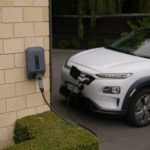
If you have a private parking space, installing a wallbox is usually the smoothest experience. Your electrician will check your panel, your supply, and the safest cable route. In many homes, a standard outlet can work for light daily driving, but it is slower and not always the best long-term solution. A proper wallbox is like moving from a garden hose to a tap with real pressure. Less waiting, more convenience.
For apartment buildings, the conversation is often about permissions and shared infrastructure. Some buildings are already adding provisions for EV charging, especially newer ones. Older buildings can do it too, it just takes a bit more coordination and patience. A little bit of neighbour diplomacy goes a long way, honestly.
Public charging habits that make life easier
Think in short, frequent top-ups rather than deep charging sessions. If you are already stopping for a coffee, that is your charging window. Keep your cable ready if your car uses AC charging often. And do not wait until you are at ten percent to start searching, because that is when every charger suddenly feels far away. That is how people get stressed for no reason.
Incentives and benefits: what to watch in Greece
Greece has used incentives to accelerate EV adoption, and the details can change depending on policy updates and funding cycles. The safest approach is to treat incentives as a bonus, not the foundation of your decision. If the deal makes sense without the incentive, you will be happy either way. If it only works with a subsidy, you are one policy change away from disappointment.
Incentives can include purchase support, charging support, and sometimes benefits related to circulation, parking, or company taxation depending on current rules. For business drivers, the real value is often the combination of predictable monthly cost and the ability to treat the vehicle as part of operating expenses. Talk to your accountant for the exact handling, because rules and interpretations can shift. A tiny change in paperwork can affect the outcome.
For official, up-to-date information, check government sources and EU policy pages as they are updated. For broader context on the EU’s direction on transport and emissions, the European Commission’s climate policy pages are a solid reference: https://climate.ec.europa.eu/.
Weather, terrain, and how they affect EV range
Greek weather is mostly friendly to EVs, especially compared to very cold countries. Still, summer heat and winter mountain trips can change consumption. Running the AC hard in August, climbing long grades, or driving fast for extended periods will use more energy. That is not a problem, it is just physics.
If you drive to colder areas in winter, the battery can be less efficient until it warms up. Preconditioning helps, and many modern EVs do it well. You will also notice that short trips with lots of stops can be less efficient than one longer drive, because the car keeps warming and cooling systems cycling. It is normal, and it is why “real range” is always personal.
For climate context and official observations in Greece, the Hellenic National Meteorological Service is the right place to check current conditions and seasonal patterns: https://www.hnms.gr/. If you are planning a long drive, it is worth a quick look, esppecially in winter.
Future outlook: where Greece is heading
The direction is clear. More EV models, better batteries, more charging points, and more drivers who are comfortable with the idea. Greece is also pushing upgrades in the energy system and public infrastructure, and EVs fit naturally into that modernisation. You will likely see more fast chargers on main corridors, more charging at supermarkets and malls, and more workplace charging as companies try to attract talent and show a greener image.
Another trend is software. New EVs keep improving after delivery through updates, which is a big shift from old-school cars. Over a three to five year contract, that matters. Your car can get smarter, smoother, and sometimes more efficient without you doing anything. Not every model does it the same way, but the overall direction is there.
Battery durability is also becoming less of a worry for normal users. People still ask, “Will the battery die?” but in real life, most modern EV batteries hold up well when treated normally. Avoiding constant fast charging to one hundred percent helps, and most cars have settings that make this easy. This is where a practical onboarding when you pick up the car makes a big difference. You do not need a lecture, you need a few simple habits.
Who an EV in Greece suits best
Business owners and executives love EVs for the quiet ride, the modern image, and the predictable running costs. If you spend time in traffic, the calm cabin is a genuine quality of life upgrade.
Families do well with an EV if they can charge at home or have a reliable charger near their daily routine. School runs, sports practice, weekend trips, it all works. The car is always “full” in the morning, which feels like cheating the system a bit.
Couples who travel around Greece will enjoy the smooth highway drive and the easy overtakes. Just pick a model with strong fast charging and plan one or two stops. Older drivers often appreciate the simple one-pedal feel and the quietness, plus many EVs have very good driver assistance features that reduce fatigue. Groups that do frequent long drives should focus on cabin space and charging speed, not just the biggest battery number on paper.
Common mistakes to avoid when switching
First mistake is buying or leasing an EV with the wrong charging plan. If you cannot charge at home, make sure you have a reliable public option that fits your routine. Second mistake is choosing based on the biggest advertised range, then being disappointed on the highway in summer. Look at real-world use, not brochure numbers.
Third mistake is ignoring tyres. EVs are heavier and have instant torque, so tyre choice matters for comfort and efficiency. Fourth mistake is not learning the charging apps and payments early. Do it in the first week, not on a road trip at night.
How we help clients get the right EV setup
With long-term rental and leasing, the goal is not just handing you keys. It is matching the car to your routes, your charging reality, and your timeline. We talk through where you park, how far you drive, whether the car is for personal use or a Greek company, and what you want the end of the contract to look like. Then we build a package that feels clean and predictable.
If you already have a model in mind, great. If not, we can narrow it down quickly based on your weekly kilometres, your passengers, and whether you do more city crawling or highway miles. You end up with an EV that feels right from day one, not a science project.
 Next Post